SEO

On-Page vs Off-Page SEO: The Ultimate Guide to Balancing Both

Published June 4, 202610 min read
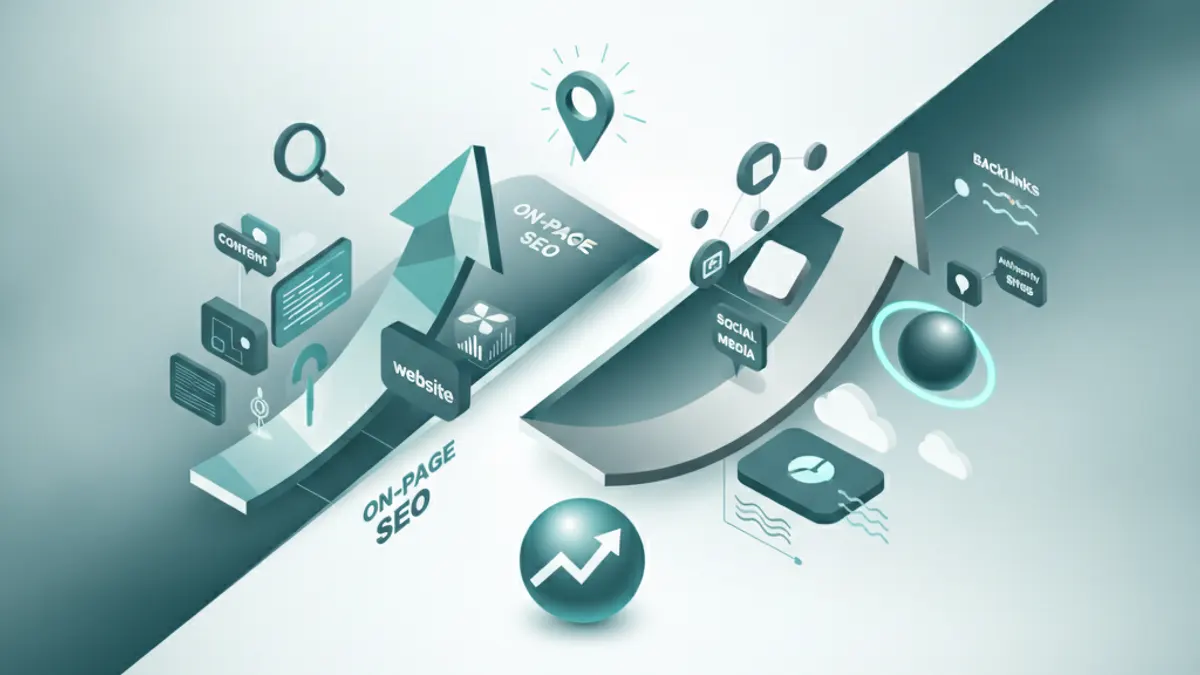
Infographic comparing on-page and off-page SEO factors for search engine optimization

Search engine optimization (SEO) can feel overwhelming, especially when you hear terms like on-page, off-page, and technical SEO. Many website owners wonder where to invest their time and resources. The truth is, SEO success depends on both what you do on your own site and how the outside world perceives it. That's why understanding the difference between on-page and off-page SEO is critical for any serious digital strategy.

On-page SEO refers to everything you can control directly on your website: content quality, keyword usage, meta tags, site speed, and more. Off-page SEO, on the other hand, involves actions taken beyond your site—primarily backlinks, brand mentions, and social signals—that build your site's authority. While technical SEO often supports both, this article breaks down the two main pillars so you can prioritize effectively.

By the end of this article, you'll have a clear understanding of what each pillar involves, the key differences between them, and a practical approach to balancing both for sustainable search rankings. Whether you're a beginner or a seasoned marketer, mastering on-page and off-page synergy is the secret to staying ahead.

What Is On-Page SEO?

On-page SEO, also known as on-site SEO, is the practice of optimizing individual web pages to rank higher and earn more relevant traffic in search engines. It involves refining both the content and the HTML source code of a page. Because you have full control over these elements, on-page SEO is the most direct way to communicate your page's topic and value to search engines.

Key components of on-page SEO include:

  • Content quality and relevance – Writing for users first, then search engines.
  • Title tags and meta descriptions – Crafting compelling snippets that drive clicks.
  • Headings (H1–H6) – Structuring content for readability and keyword emphasis.
  • Keyword optimization – Targeting terms naturally without keyword stuffing.
  • URL structure – Using clean, descriptive URLs.
  • Internal linking – Connecting related pages to distribute authority.
  • Image optimization – Using descriptive file names, alt text, and compression.
  • Mobile-friendliness and page speed – Ensuring a seamless user experience across devices.
  • Structured data markup – Helping search engines understand your content with schema.

When you optimize these on-page factors, you make it easier for search engines to crawl, index, and understand your pages. This directly influences rankings for targeted queries. For instance, a well-optimized blog post with relevant headings, proper keyword placement, and fast load times is more likely to appear on the first page.

If you're targeting a local audience, on-page SEO becomes even more critical. You need to align your content with regional search behavior. Our guide on seo for thai business explains how to tailor on-page elements to capture local search intent effectively.

On-page SEO is the foundation of your entire optimization strategy. Without solid on-page practices, even the most impressive off-page efforts may fall short. That's why it's essential to get the basics right before moving on to external signals.

What Is Off-Page SEO?

While on-page SEO focuses on elements you control, off-page SEO deals with external factors that influence your site's authority and reputation. The most prominent off-page technique is link building, but it also includes social media engagement, brand mentions, guest blogging, and influencer partnerships.

Search engines view backlinks as votes of confidence. When reputable sites link to your content, it signals that your site is trustworthy and valuable. This boosts your site's authority, which helps all your pages rank higher over time. However, not all backlinks are created equal—quality and relevance matter immensely.

Common off-page SEO activities include:

  • Backlink building – Earning links from authoritative websites in your niche.
  • Guest posting – Contribute valuable content to other blogs in exchange for a backlink.
  • Social media marketing – Sharing content to increase visibility and engagement.
  • Brand mentions – Getting your brand name mentioned even without a link (co-citations).
  • Influencer outreach – Partnering with industry influencers to amplify your content.
  • Forum and community participation – Providing value on platforms like Reddit or Quora with links where appropriate.
  • Local citations – For local businesses, consistent NAP (name, address, phone) across directories.

A key metric for measuring off-page success is Domain Rating (DR), which estimates the overall strength of your backlink profile. To learn more about how DR is calculated and why it matters, check out our article on domain rating explained.

One practical way to accelerate your off-page efforts is through high-quality guest posting. By publishing articles on established websites, you can earn contextual backlinks that drive referral traffic and boost authority. If you're looking for a reliable way to acquire such links, the tanjen.net Guest Post service connects you with reputable publishers in your niche, streamlining the link-building process.

Off-page SEO is often slower to show results than on-page, but its impact on long-term rankings is profound. A site with strong authority can outrank competitors even if their on-page optimization is slightly weaker. However, the best strategy is to build off-page signals on top of a well-optimized site.

Key Differences Between On-Page and Off-Page SEO

Now that we've defined each, let's compare them directly.

AspectOn-Page SEOOff-Page SEO
ControlFull control over your site's elementsLimited control – depends on external factors
Primary FocusContent quality, structure, and relevanceAuthority, trust, and external validation
Timeline of ResultsOften faster – pages can rank within weeks if optimizedSlower – building authority takes months or longer
CostMostly time-intensive (content, design)Can require significant budget (outreach, paid links)
ExamplesMeta tags, headings, internal links, page speedBacklinks, guest posts, social signals, brand mentions
Impact MechanismDirect signaling of page topicIndirect signaling via perceived authority

Understanding these differences helps you allocate resources wisely. On-page SEO is your starting point: it ensures your site is crawlable, user-friendly, and relevant. Off-page SEO amplifies that relevance by proving to search engines that others value your content.

These two pillars work together. A page with impeccable on-page optimization will struggle to rank without any backlinks, especially in competitive niches. Conversely, a page with many backlinks but poor content and slow loading times will fail to convert visitors and may eventually lose rankings.

For local SEO, both on-page and off-page elements must be aligned. Our guide on local seo thailand demonstrates how to incorporate location-specific keywords and local citations to dominate regional search results.

In reality, successful SEO strategies integrate both pillars seamlessly. The strongest rankings come from pages that are both technically sound and widely referenced by authoritative sources.

How to Balance On-Page and Off-Page SEO

Balancing on-page and off-page SEO isn't about splitting time 50/50. It's a strategic decision based on your website's current state, goals, and competition.

Start with a Solid On-Page Foundation

If you're building a new website or revamping an old one, prioritize on-page SEO first. Without quality content and a well-structured site, off-page activities are less effective. Perform keyword research to understand user intent, then create content that directly answers questions. Optimize every page with unique title tags, meta descriptions, headings, and internal links.

Also ensure your site meets technical baseline standards: fast loading, mobile-friendly, secure (HTTPS), and easy to crawl. These on-page factors set the stage for everything else.

Build Off-Page Authority Gradually

Once your on-page is solid, shift focus to earning backlinks. Start with attainable goals: publish guest posts on related blogs, reclaim lost backlinks, and reach out to partners or clients for links. Guest posting is an excellent way to build both links and brand exposure.

Monitor your backlink profile to avoid toxic links. Quality always trumps quantity. Use tools like Ahrefs or Moz to track your progress and identify opportunities.

Maintain Both Over Time

SEO is not a set-and-forget process. On-page updates may include refreshing old content, adding new pages, or adjusting technical elements. Off-page SEO requires continuous outreach and relationship building.

A good rule of thumb: spend 40% of your SEO effort on on-page (including content creation and technical improvements) and 60% on off-page when you're actively building authority. Adjust as needed based on performance.

Finally, don't ignore technical SEO. It supports both pillars: improving site speed enhances on-page user experience, while clean site structure helps search engines discover pages that earn backlinks. Consider technical SEO as the underlying infrastructure.

Conclusion

On-page and off-page SEO are not competing priorities—they are complementary forces that together determine your search engine visibility. On-page gives you control over how your content is presented, while off-page builds the credibility needed to compete in search results.

The key to success is balance. Start with a solid on-page foundation, then methodically build off-page authority. Regularly audit both areas to ensure they remain aligned with your goals. If you focus too heavily on one, you'll leave ranking potential on the table.

By mastering both pillars, you'll create a website that is not just optimized for search engines, but also valuable for real users—the ultimate win for any online presence.

Further reference: use Google Search Central's SEO Starter Guide to cross-check crawling, indexing, title tags, descriptions, and content structure basics.

Key Points:

  • On-page SEO is fully controllable and forms the foundation of your rankings.
  • Off-page SEO builds trust and authority through external signals.
  • Balance both by starting with on-page optimization, then gradually building off-page authority.
  • Regularly audit both areas and adjust your strategy based on performance.
  • Technical SEO supports both pillars and should not be overlooked.

Frequently asked questions

Related articles

Ready to get started?

Ready to build better backlinks foryour website

Start with the package that fits your budget, then let the team handle the next steps in a clear workflow. Discuss the details and place the order right away.